Neurotech Project aiming to significantly improve Neurofeedback Responder Rate
Neurofeedback
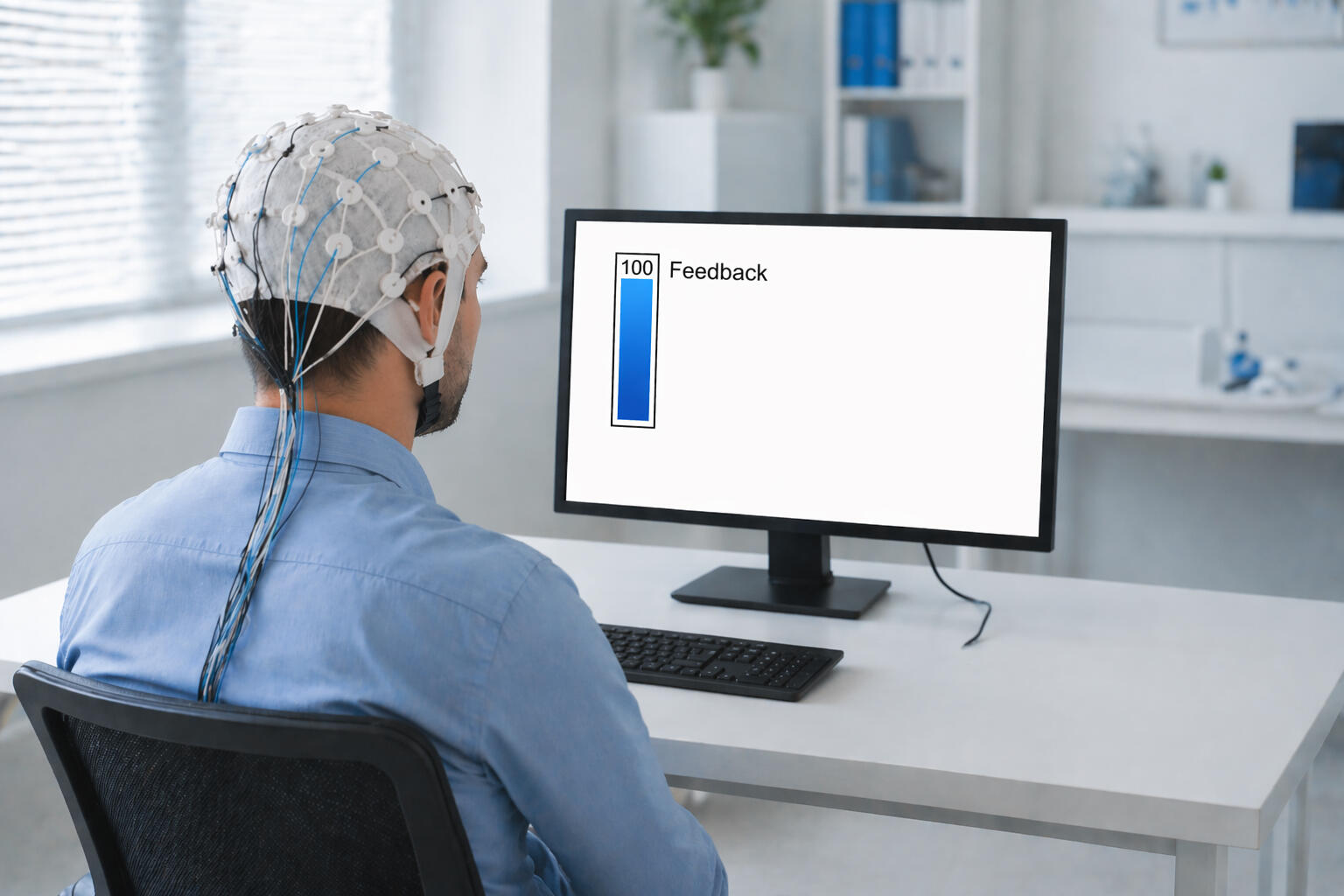
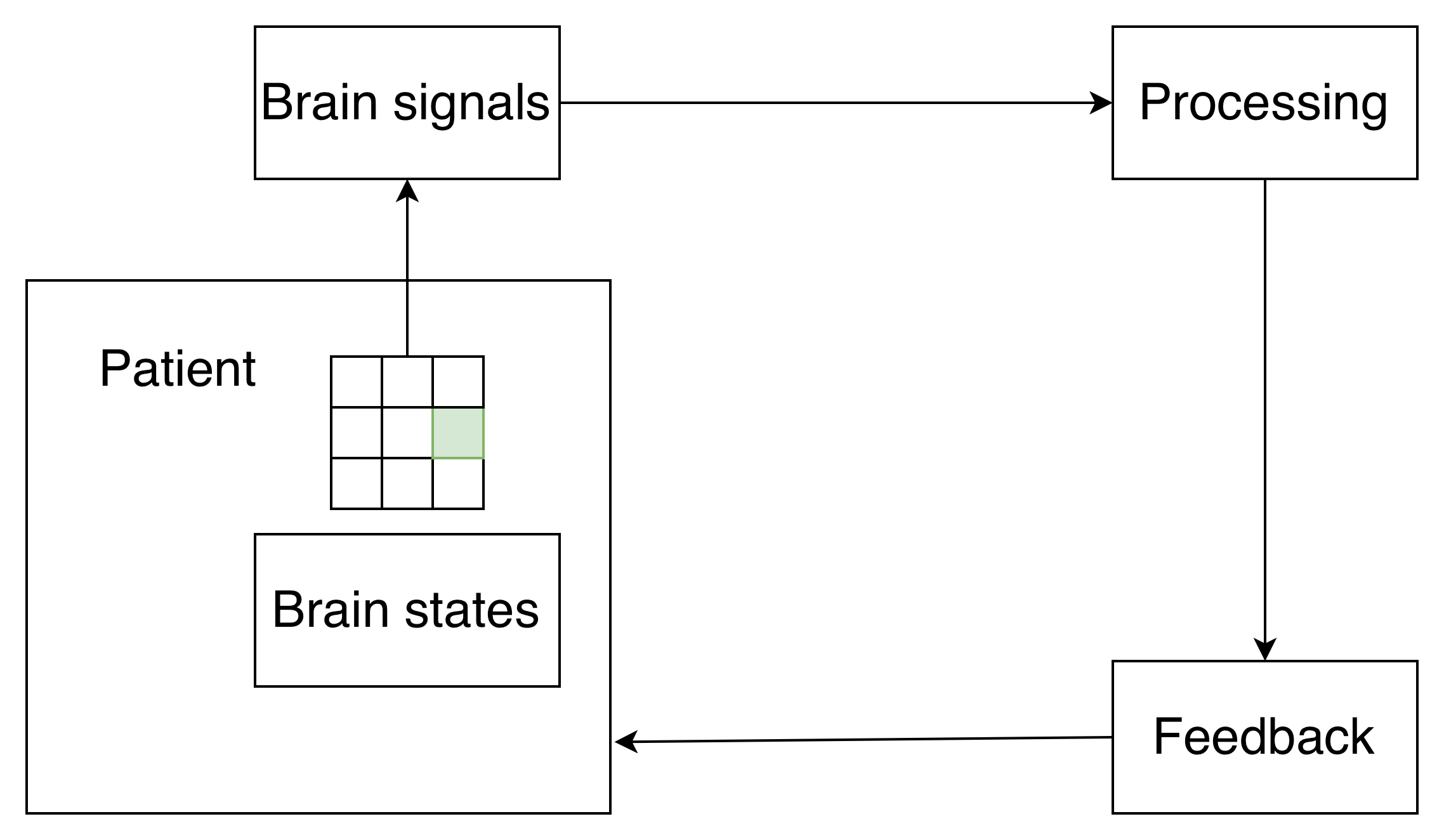
During neurofeedback, a patient's brain signals are recorded, processed, and used in real time to compute feedback that is displayed back to them. This closed loop gives patients direct insight into their own brain states, allowing them to discover the mental strategies associated with the highest feedback value. By configuring how feedback is computed, therapists can target specific brain states — guiding patients to learn to self-regulate their own neural activity.This same principle underpins brain-computer interfaces (BCI), where a patient who has learned to control their brain states can use mental strategies to operate external devices. In both cases, the feedback loop between brain and interface is what makes learning possible. Neurofeedback can therefore be understood as a specialized form of BCI.As a non-invasive alternative to drug therapy, neurofeedback has shown promise across a range of conditions — most notably PTSD, ADHD, depression and anxiety. The next-generation neurofeedback is poised to accelerate adoption further, combining precision medicine approaches using fMRI, advanced computation and AI - Gray Matters-Health, with accessible home-use devices from companies like MUSE. Other areas involve wellbeing (stress reduction, meditation) and performance training.Yet several fundamental challenges remain unresolved. Inconsistent responder rates around 60%, high dropout, and a lack of interpretability continue to limit the reliability and transparency of neurofeedback — bottlenecks that stand in the way of broader clinical and consumer adoption.
.
.
.
LoopInView
A personalized gamified simulation based on the patient's own signals and the device used, serving for responder pre-selection and teaching the patient to use their feedback.
Aspiring to accompany every neurofeedback therapy protocol.
A new, unique technology called Dynamic Brain State Marker.
A methodological software layer for neurofeedback aimed at mechanistic insight that directly addresses the aforementioned bottlenecks and opens new possibilities for personalization and making outcomes more objective.
A compatible modality-agnostic framework designed to elevate current neurofeedback pipelines and protocols. First prototype aimed at EEG.
Making use of advanced signal analysis and circuit mathematical modeling as well as inference modeling, combined with a patient-oriented approach targeting behavioral psychology and motor control aspects - in other words - modeling and examining the human-in-the-loop system.
Leveraging patient data to deliver tailored instructions and outcome predictions, while isolating patient-caused effects to make results more objective.
Use cases
1. Responder pre-selection — Identifying likely responders before protocol development and testing begins, reducing wasted resources and improving trial efficiency.
2. Non-responder to responder conversion — Helping patients interpret feedback signals, enabling faster and more effective learning of target mental strategies.
3. Interpretability-driven pipeline optimization — Tuning devices and processing pipelines in a way that is anchored in interpretability of the produced feedback, improving both performance and transparency.
4. Therapist-side simulation for personalized coaching — Allowing the therapist to simulate and explore the patient's brain state dynamics firsthand, enabling them to craft more precise, personalized instructions and reframe guidance in ways that better match the patient's conditions.
Status
• US provisional patent filed
• Proof of concept has been implemented using a real-time pipeline for preprocessing and feedback computation based on published paper and public dataset, confirming feasibility. However, validation requires real-time pipeline and the raw data the pipeline was implemented for and tuned on.
• 100% IP ownership retained — currently unaffiliated with any institution, sharing IP is negotiable with the right partner
• Actively seeking partnerships with access to data, hardware and software for signal processing and feedback computation, and the capacity to run subject trials for validation
Next steps
1. Proof of concept validation with a strategic partner
2. Prototype implementation and validation on subjects
TextTuning the device and processing pipeline based on interpretability of the produced feedback
fsd
Not every patient can interpret the feedback
• Known bottleneck, but unaddressed, resulting in non-responders and abandonment of protocols
• If patients can't interpret it, it becomes a sham feedback! - (playback feedback from a different session, used in blinded studies)
• We can address that issue using a
dynamic brain state marker
Dynamic Brain State Marker
• Device and person specific
• Targets the whole human-in-the-loop system:
Patient's data, device and patient's ability to form a connection
between brain state and feedback
• Using:
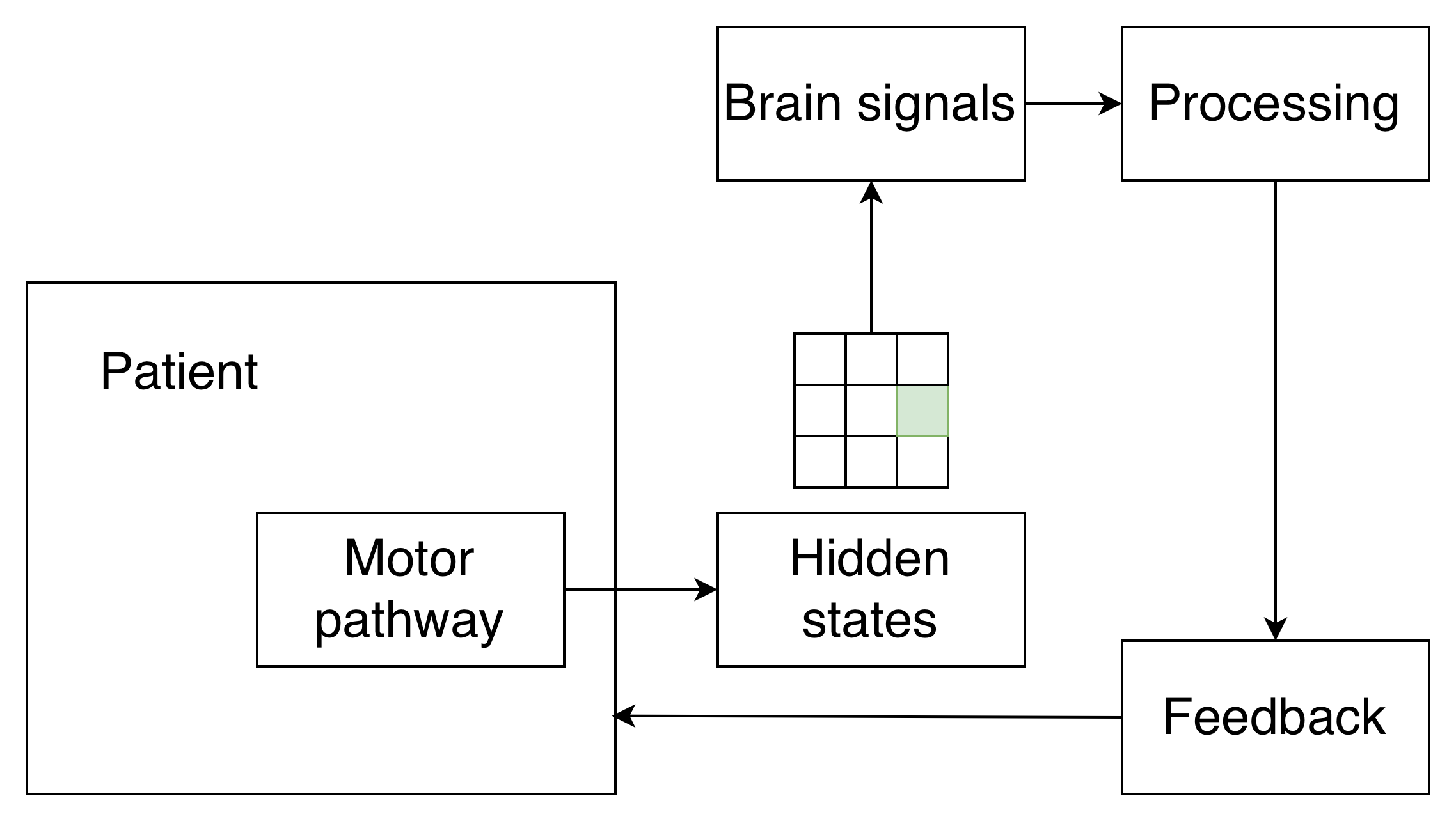
brain signals + device preprocessing and feedback computation + simulation
Brain states are dynamically encoded in feedback
• The encoding of a mental strategy in feedback representation is complex
— it requires a specific skill to use the feedback
• We can both teach the skill and also test it
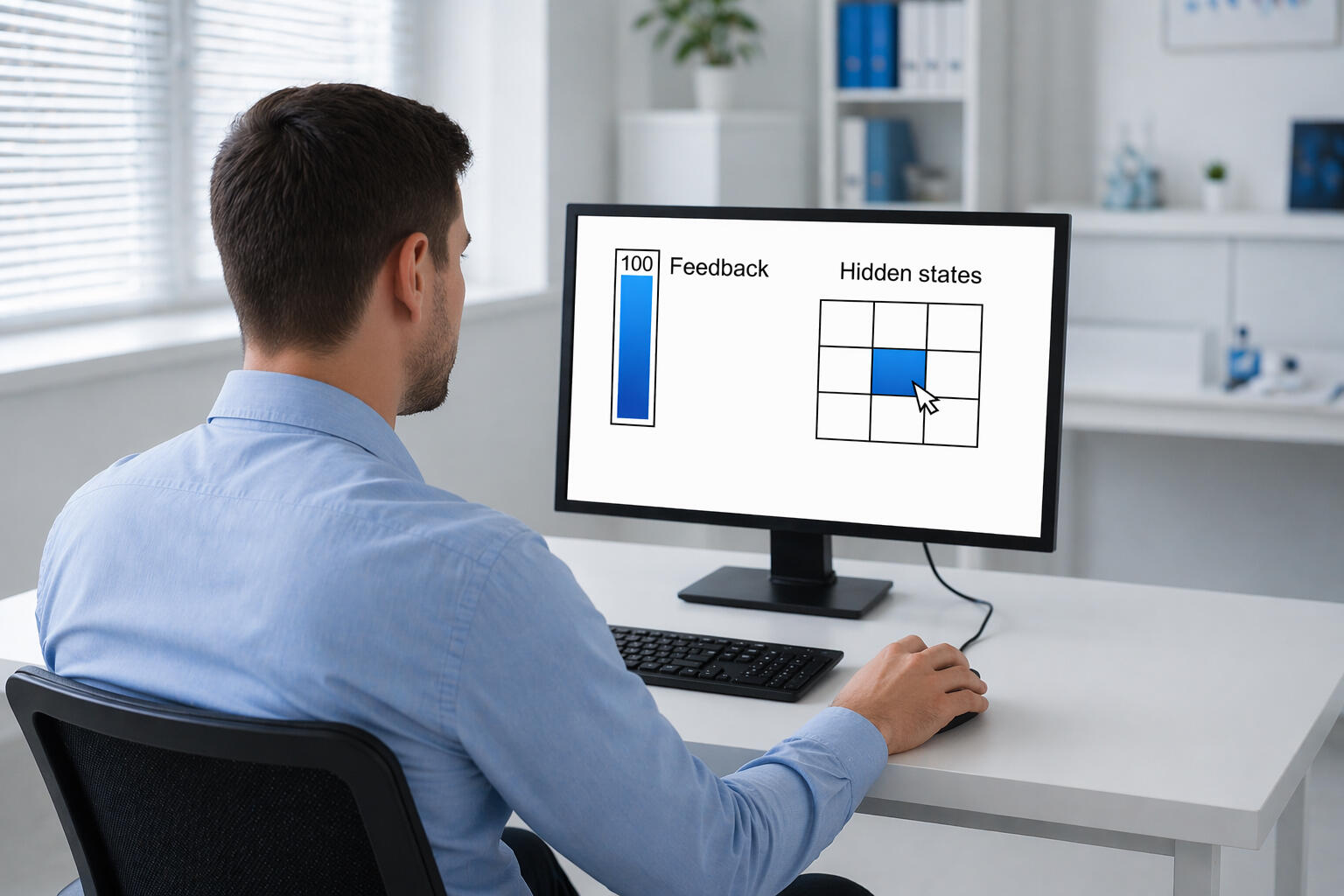
Simulation
• Not only a delay!
• In some cases the feedback can't be interpreted!
• Let's:
1. Extract the dynamic brain state marker
2. Create a simulation in which the patient
can test their ability to interact with their own feedback
3. Instruct them through gamified simulation
Outcomes of the gamified simulation
1. Patient succeeds
can benefit from NF, more efficient NF training
2. Patient learns to succeed
possible conversion from non-responder
3. Patient fails to succeed
needs to work on understanding the feedback or needs less noisy data - possible rearrangement
Technology
We model the physical recursion within the feedback loop as a dynamic observer framework built on state-space modeling with nonlinear time integration. It is derived from Volterra series with inferential kernels.
The model leverages each patient’s brain signal data, real-time processing, and feedback computing pipeline to construct a fully personalized, device-specific dynamic brain state marker.
Within a gamified simulation, the patient learns the optimal hold-time—i.e., how long a mental strategy must be sustained to reliably infer the causal relationship between their internal strategy and the patterns in observed feedback signal. In other words, they will learn when they can confidently interpret what the feedback value represents.
Dynamic brain state marker is based on the hypothesis that neurofeedback learning is a metacognitive task during which patient performs self-inference about their mental state. The cognitive skill is mathematically formulated using inference modeling combined with signal analysis and circuit modeling which leads to personalized (patient, device specific) model of self-inference. It enables us to extract the mechanism and create a simulation using motor pathway which keeps the same inferential properties and enables us to transmit the skill of making an association between hidden state and feedback to the patient as well as testing it and evaluating patient's performance.
Resulting in patients using the acquired skill to guide them during finding the mental state that increases the feedback.
Based on the assumption that the simulation is easier than real neurofeedback, we can pre-select the patients based on their ability to perform in the simulation.
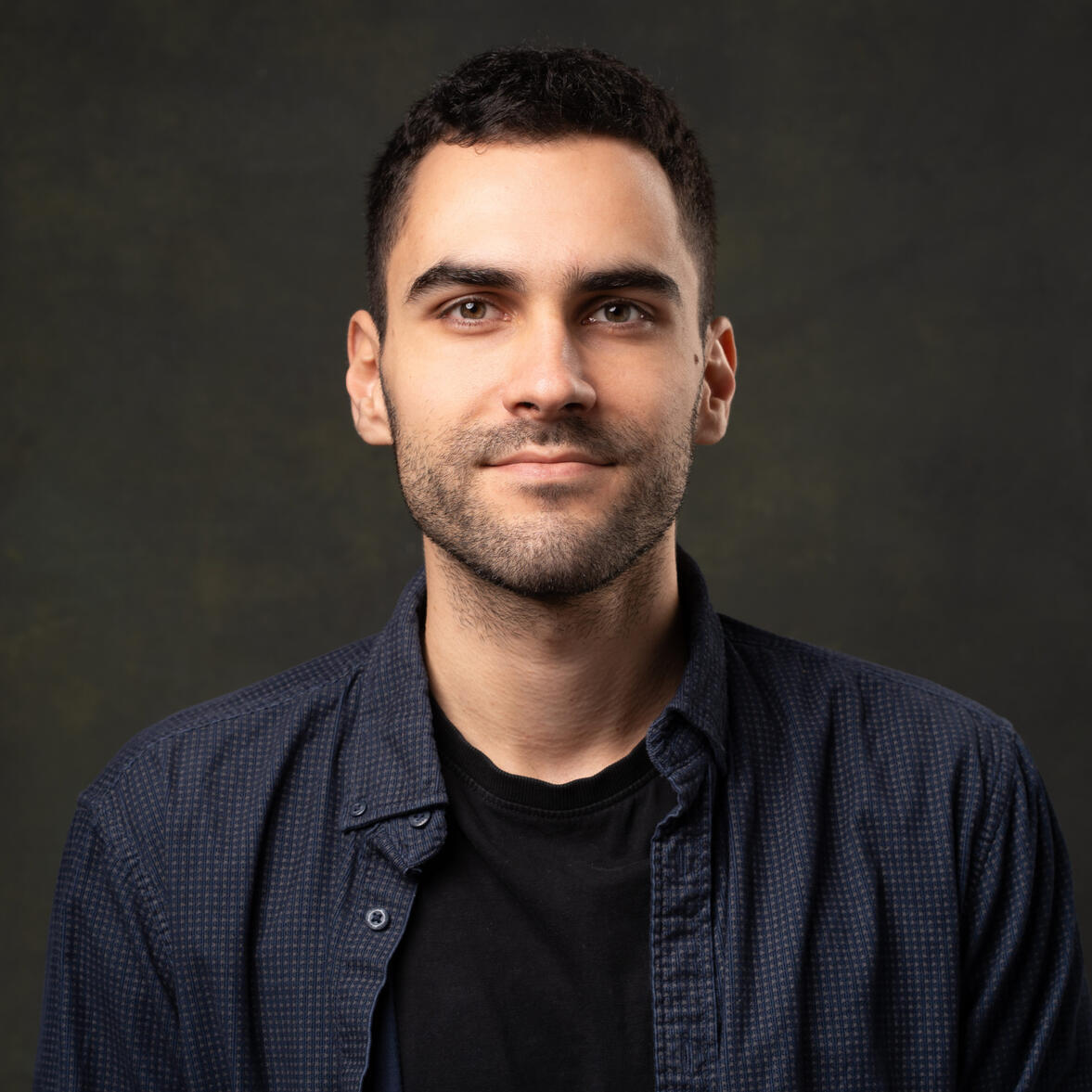
Adam Jeřábek, MD
I am a medical doctor and a biomedical engineer from Prague, Czech Republic, Europe.
My goal is to apply electrotechnical knowledge of circuits and their analysis to the modeling of human-in-the-loop system and improve the understanding of the cognitive aspect of neurofeedback and BCI systems.
Story
My professional life is driven by a fascination with both medicine and technology and a passion for finding creative solutions to hard problems that can help others.
I believe that non-pharmaceutical approaches based on self-regulation and insight into mental processes are key for the future of neurofeedback in mental-health and well-being.
Medical experience
I received my MD from Charles University, after which I worked at the Neurology Department in an interventional neurology group as a resident neurologist and neuroscientist.
My work focused mainly on patients with Parkinson’s disease (PD). I gained experience in cutting-edge neurofeedback research at Maastricht University in the lab of Prof. David Linden and Prof. Rainer Goebel, and focused my research activity on fMRI neurofeedback in patients with PD.
Overall, my medical background gave me a unique and intuitive understanding of biological feedback loops, since the reflex arc and its examination are both a fundamental concept and a focal point of neurology.
Biomedical engineering
I completed both bachelor’s and master’s degrees in electrical engineering, specializing in signal processing and analysis, at the Faculty of Electrical Engineering of Czech Technical University in Prague.
In my thesis, I focused on the analysis, interpretation, and fusion of EMG and DBS signals, as well as on the fusion of simultaneous fMRI and EEG data.
Overall, my engineering background gave me a strong foundation in closed-loop feedback systems, as they are a core element of signal modeling and analysis.